To secure your company’s future, it’s essential to have a strategy that is both disciplined and adaptable. In today’s rapidly changing market, marketing strategies can be unpredictable, making it difficult to adhere to a single long-term goal. Instead, we should set adaptable short-term goals, using metrics for regular monitoring to ensure we stay on track.
I’d like to discuss popular frameworks that are often used to manage the dynamic nature of these strategies, helping to assess if we are on the right path or need to adjust our approach.
Finding Your North Star Metric (NSM)
The North Star Metric (NSM) is a straightforward yet impactful concept for products. Sean Ellis, the author of “Growth Hacking,” frequently discusses it when addressing recurring issues in product management.
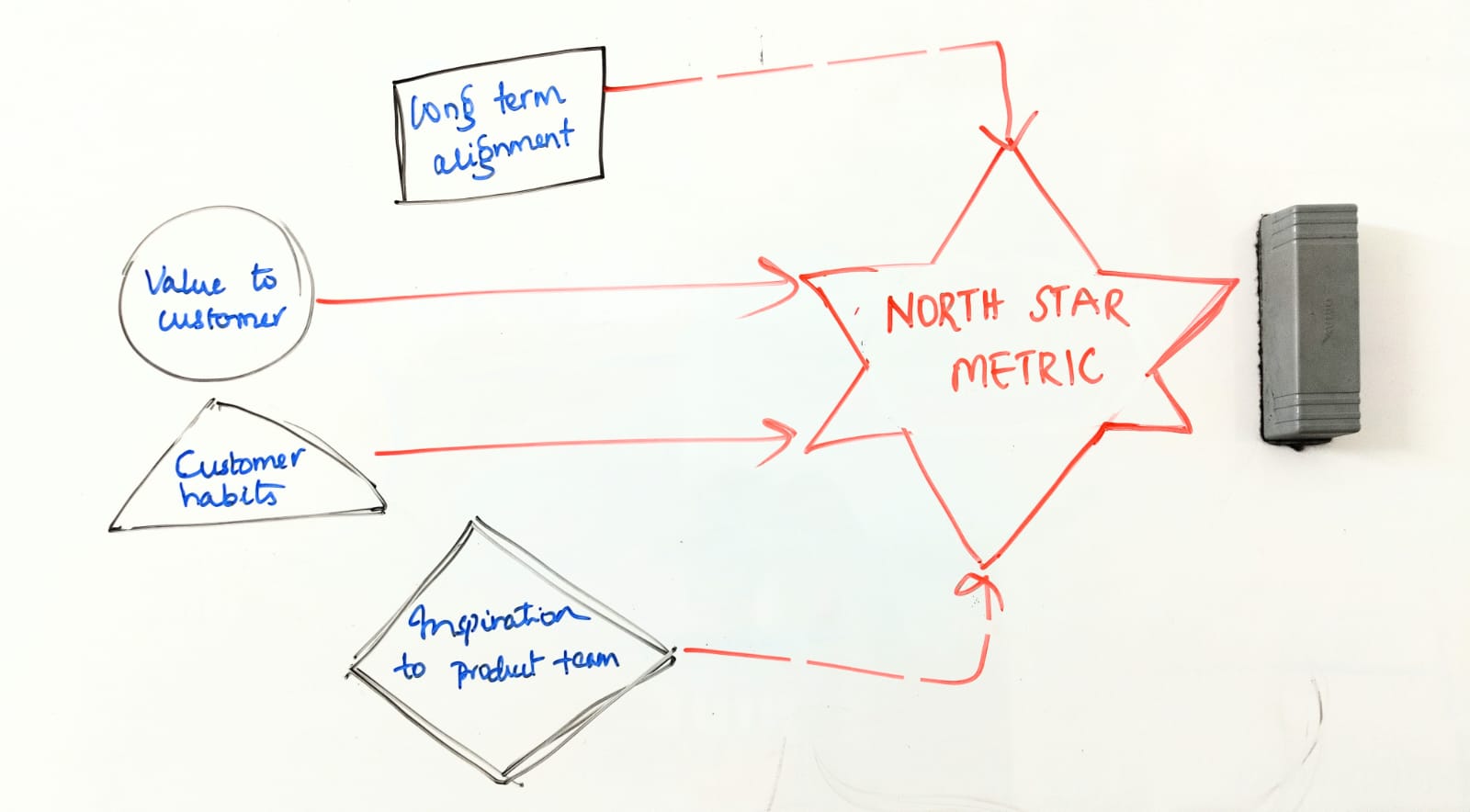
The NSM focuses on rapid growth while ensuring that value delivered to the customer remains consistent with the pace of growth.
NSM serves as a single, customer-focused metric that reveals whether a company is fulfilling its vision. The NSM is data-driven, not influenced by individual opinions, and represents a sustainable metric that always offers insight, regardless of its increase or decrease.
From the survey conducted by Amplitude, a digital analytics company, most digital product companies play one of the three games which could be considered as core principles:
- Attention game: amount of customer time captured Eg: Netflix, Spotify, YouTube, Instagram
- Transaction game: number of commercial transactions user made on platform Eg: Amazon, Uber, Zomato, Airbnb
- Productivity game: number of high value digital tasks customer performed using/with your product Eg: ChatGPT, Adobe Tools, Hubspot
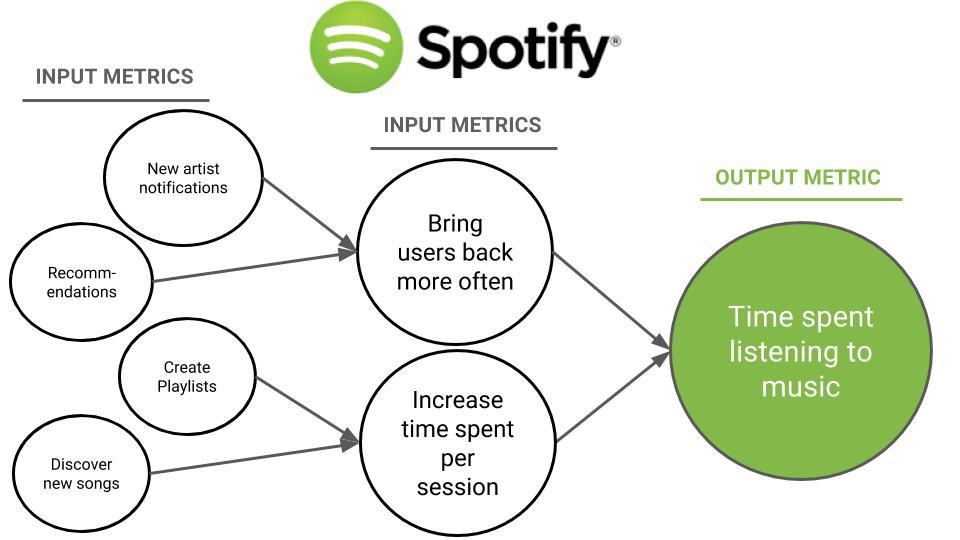
After understanding the core principles, it is time we look into finding the NSM. Steps that could help in finding NSM are:
- Identify the game: Determine which game your business plays.
- Value proposition: Clearly define the value your company provides to customers.
- Key actions: Identify the actions that drive business by attracting customers.
- Find the metric: Determine the metric representing the key action. This is your NSM.
- Measure value: Ensure the metric measures the value delivered to the customer.
- Represent strategy: The metric should reflect the core product value and strategy.
- Future indicator: The NSM should predict future business outcomes.
- Act on it: Regularly observe and optimise based on the NSM.
- Be transparent: The NSM should be a motivational daily metric, visible to all.
- Set targets: Set ambitious but achievable targets for the NSM to motivate your team.
- Align the team: Align all KPIs with the NSM as the focal point.
- Experiment: Experiment with marketing strategies, features, and customer experiences to improve the NSM.
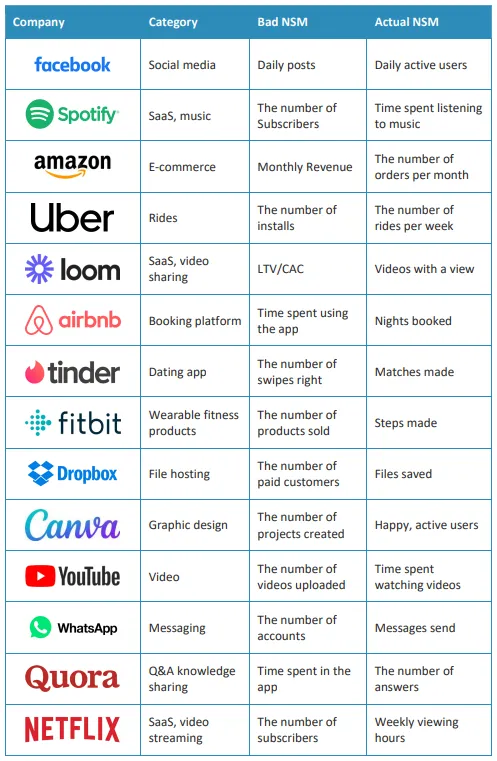
Avoid assuming that revenue or units sold are the only NSMs. Adding value to customers ensures long-term business sustainability.
Pawel Huryn in North Star Framework suggests asking four questions before defining NSM:
- Does the metric truly define the value provided to customers?
- Will this metric help create customer habits?
- Will it inspire the product team?
- Will this metric indicate long-term sustainability and success?
Few examples of good NSM and Bad NSM which can often confuse the success rate of many product and marketing teams in their Marketing team and GTM discussions.
Manage your Marketing Team and Metrics
A collaborative goal-setting framework should be used by teams and individuals to establish ambitious goals with measurable outcomes. It helps track progress, fosters coordination among internal and external teams, identifies bottlenecks and bandwidth issues, and encourages collective efforts toward measurable goals within the marketing team.
In the process of achieving the goals there should be two distinct purposes: an objective that provides direction, a measurable metric that is typically reviewed monthly or quarterly. Ultimately, it should result in a clear “yes” or “no” regarding whether the goal was achieved. If it is a No we should atleast know why you couldn’t achieve it.
- Objective: What needs to be achieved, bold and ambitious without specific numbers
- Commitment: Action-oriented; what needs to be done
- Inspiration: What the company aims to achieve
- Learning: You either succeed or learn, there is no failure
- Measureable metrics: Specific, time-bound, and ambitious but realistic ways to reach the objective. Every team and individual should monitor and evaluate their metrics regularly within the set time frame.
Setting up tangible metrics is both an art and a science. The effort is worthwhile because they become a valuable nuumbers for the entire company. Initially, finding the right metrics may be challenging, and results often need to be revisited, challenged, and sometimes metrics needs replaced too. The driving force should be to understand what made them effective or ineffective and achievable or unachievable.
How to set up your metrics
- Review examples: Look at similar companies in the industry to gain insights.
- Top-down approach: The best GTM strategies align with the company’s goals and are co-created with the team. Focus on:
- The most important goal for everyone - the company’s objective
- Your team’s metrics that contribute to the company’s goals
- Example: LinkedIn employs a top-down approach in their goal-setting process. CEO Jeff Weiner believes that strong leadership can elevate a team through coaching, strategic planning, clear goal definition, and measurable outcomes. Objectives are set at the leadership level and then systematically broken down to team and individual levels.
- Individual goals and metrics: Align personal goals with the team’s and the company’s Objectives.
- Collaborative process: The best objectives and metrics emerge from workshops and brainstorming sessions, emphasising team effort over individual input.
- Determine objectives first: Set objectives before defining the metrics that will lead to achieving them.
- Limit objectives and metrics: Each individual or team should have three to five objectives, with up to five metrics per objective. The benchmark is a guideline, not a rule; one is better than none. Goal setting framework is meant to motivate, not overwhelm.
- Visible display: Display measuring metrics in visible places and refer to them frequently in your actions so they become your compass toward achieving the company’s goals.
- Example: Google is among the select companies that have adopted transparent metrics. All employees can view their team’s goals and progress, ensuring visibility and alignment for everyone involved.
It’s fine to seek advice from experts and strategists, but you are responsible for achieving your targets. Experts can guide you with frameworks and warnings, but the results are yours. Own them—whether you succeed or learn from the process.
Progress Check
Regularly review progress. Although the goal setting frameworks are typically evaluated quarterly, most GTM strategists recommend monitoring them monthly. This approach provides better feedback loops, identifies bottlenecks, allows for adjustments, and highlights areas for improvement.
Objectives are not directly measurable; their success is gauged based on the performance measured through metric results. On a scale of 0 to 1, a score of 0 indicates a complete miss, while a score of 1 signifies that the target result was achieved for each metric. Objectives are measured based on the average of all the metric results combined. The goal is to achieve a perfect score of 1.0 with commitment objectives, which should be achieved at all costs by the end of the cycle. For aspirational objectives, which are beyond the team’s ability to fully complete, an average metric score between 0.4 and 0.7 is considered successful by industry standards. Learning objectives should score above 0.5 to demonstrate growth and progress.
The entire process of GTM, identifying your NSM, and your goal setting process serves as a compass. Use it wisely, recognizing that there is no single correct path. Learn, stumble, and continue learning through the journey. As previously mentioned, “you either win or learn; failure only happens when the same mistake is repeated without any learning.” Regularly gather feedback, integrating it into everyday life instead of solely relying on what you already know.