Diffusion of innovation is a fascinating theory formulated by E.M. Rogers in the 1960s. It describes how an idea of the new innovative product gains momentum and spreads over time. I’d like to discuss a specific aspect of this theory: Innovative decision process.
The decision-making process regarding a product/service is not instantaneous for customers; instead, it involves a series of distinct actions.
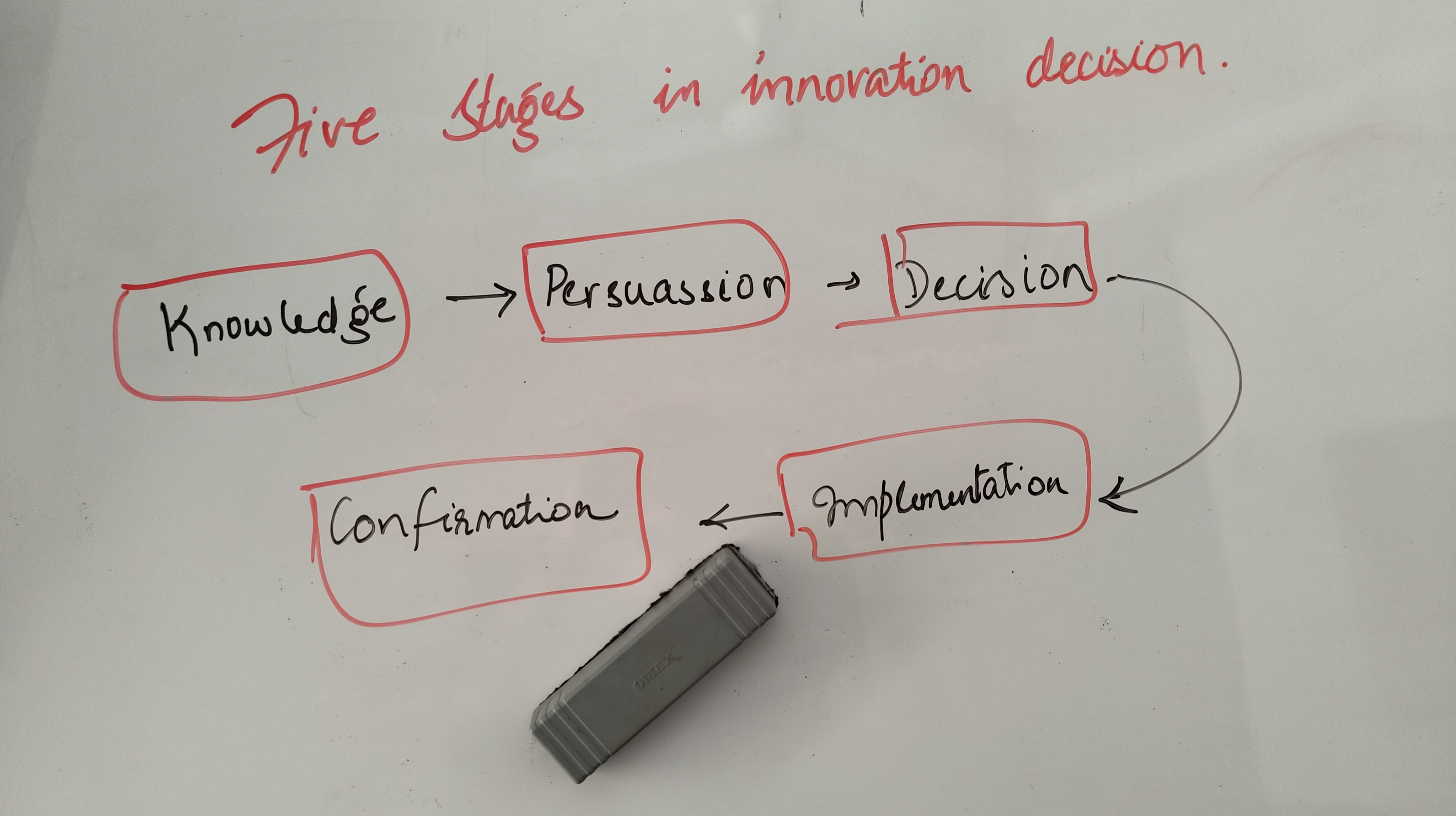
The product decision process consists of five stages
- Knowledge - The customer is introduced to the product and learns about its features and capabilities.
- Persuasion - Based on the knowledge acquired, the customer forms either a favorable or unfavorable opinion about the product.
- Decision - The customer engages in activities that lead to either adopting or rejecting the product.
- Implementation - The customer begins using the product and may customize it to fit their needs.
- Confirmation - The customer seeks confirmation of the decision they have made, which may still be reversed depending on new information or experiences.
Let us deep dive into each of these stages and understand better.
Knowledge Stage
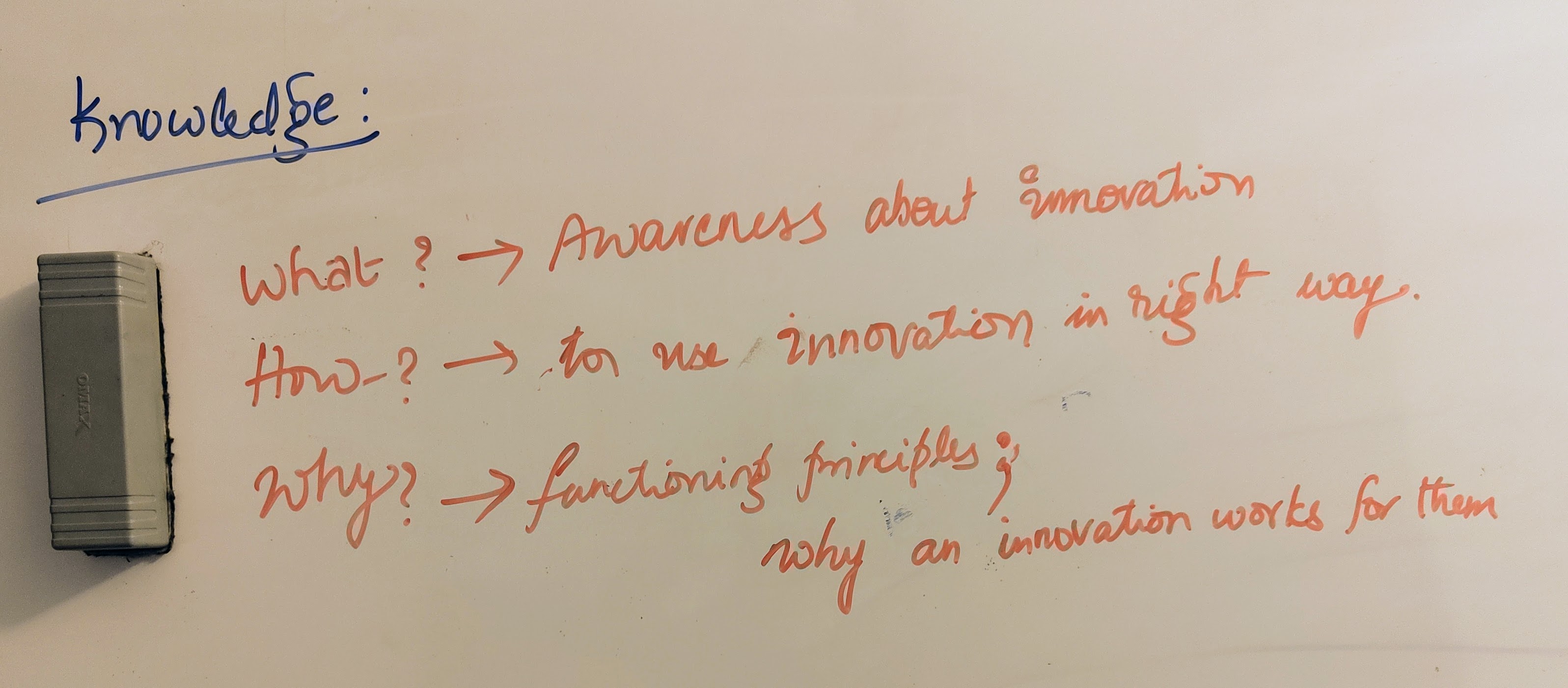
When someone finds out about a new product, they usually start by learning what it does and how it works. There’s no clear answer on whether people need the product first or if they just find out about it later - it depends on the specific thing. People can learn about products through different ways, like stumbling upon them, talking to friends, or getting information from somewhere else.
When someone is looking for a new product, they usually choose one that fits their interests, needs, and what they believe in. They tend to ignore messages that don’t match those things.Because of this, people often only pay attention to information that agrees with what they already think, and they interpret it in a way that matches their beliefs.
Typically, customers look for the following types of information about a product or service:
- What is innovation?
- How does it work?
- Why does it work?
Persuasion Stage
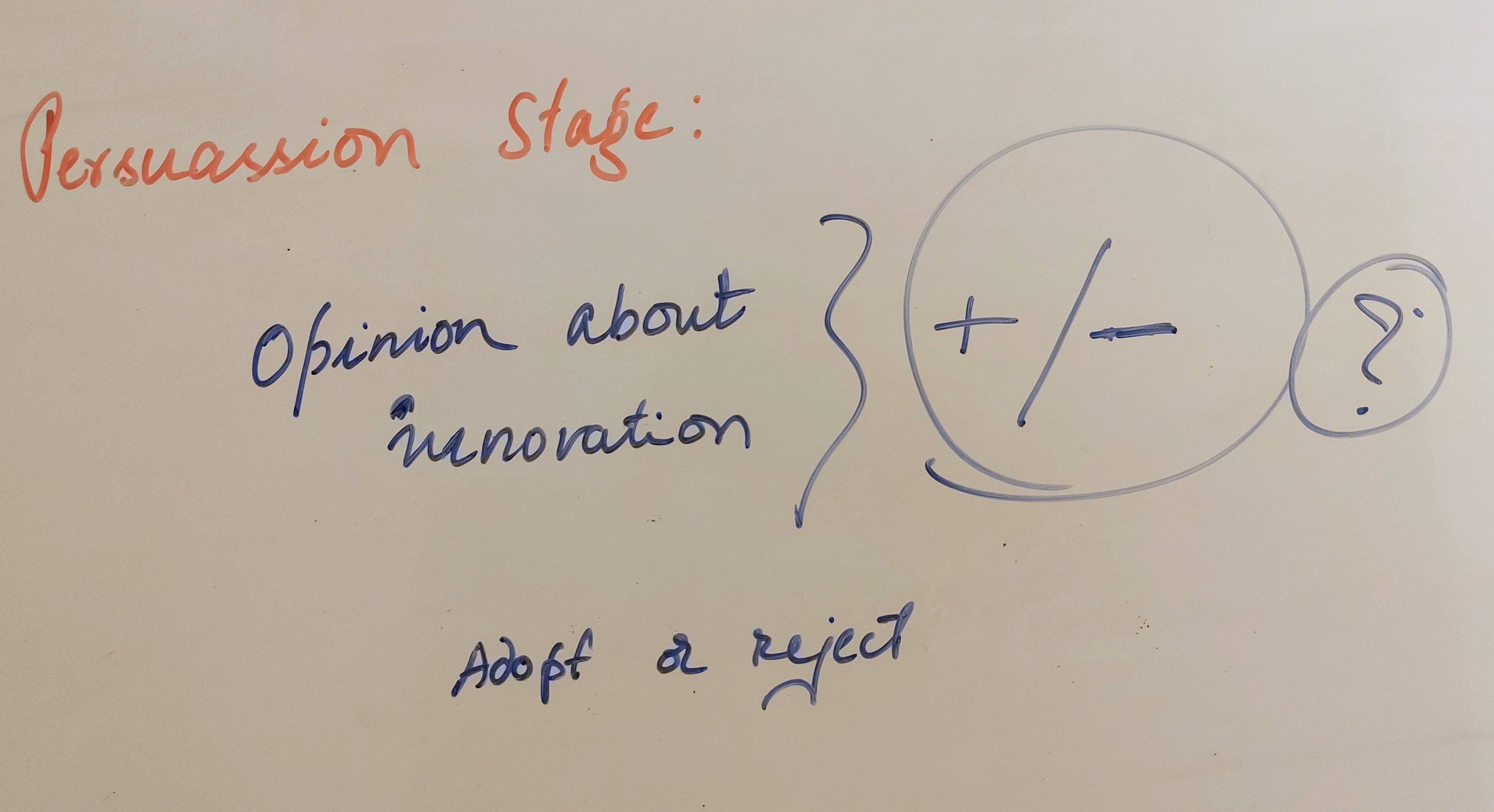
When people learn about a new product, they start forming opinions about it. These opinions can be good or bad, and depend on whether the right people are hearing about it. What people already believe can also influence their opinion. During this stage, customers are trying to understand the product. But as they get more information, their feelings about the product start changing too. They become more interested and think about what might happen if they use the product.
Customers want to know the answers to questions like “What will happen if I buy this?” and “Is it worth it?” It’s important to answer these questions to help them make a decision. People often look for information on how the product works, its good points and bad points, to calm their worries before moving forward.
The goal of this stage is to form a clear opinion - either positive or negative. But just because someone likes an idea doesn’t mean they’ll actually use it. There’s a gap between knowing about something, liking it, and actually using it, which we call the KAP-gap (Knowledge, Attitude, Practice).
Decision Stage
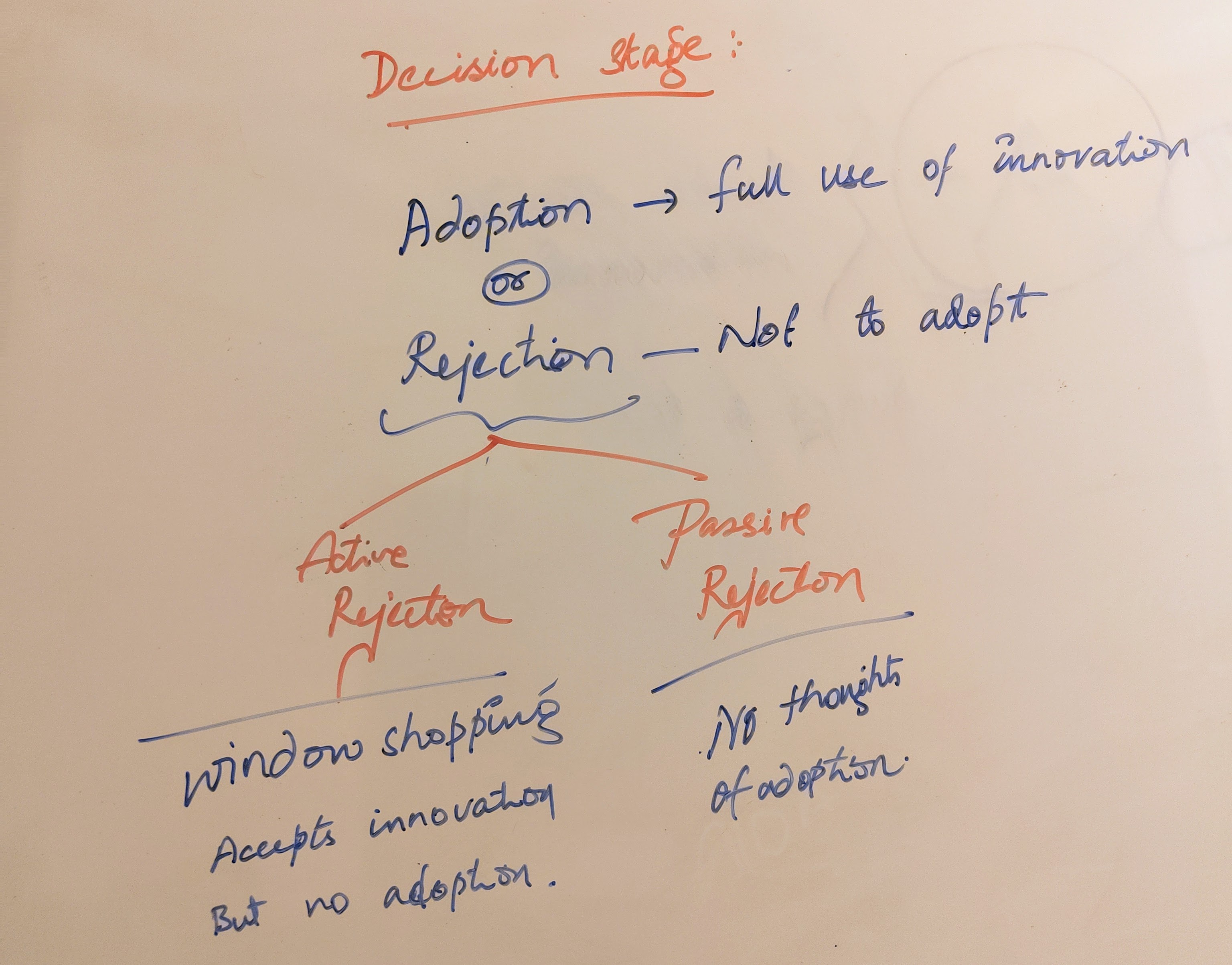
When customers are deciding whether to use a new product, they go through a process where they weigh their options and make a choice. They can choose to adopt the product (use it) or reject it (not use it).
One important way to make this decision is by trying out the product hands-on. This works especially well with software products that offer trial periods. When customers get to try something before committing, they’re more likely to decide to use it.Product demos can also help people make up their minds faster. Demos are especially helpful when done by someone who’s respected or influential, because it adds credibility and saves time.
It’s not just about getting people to adopt the product - it’s also important to understand why some people might choose not to use it. Not every product is right for everyone, and some people might be happy with what they already have. When customers decide against using a product, it can happen actively (they consider it but don’t like it) or passively (they never even considered it).
Implementation Stage
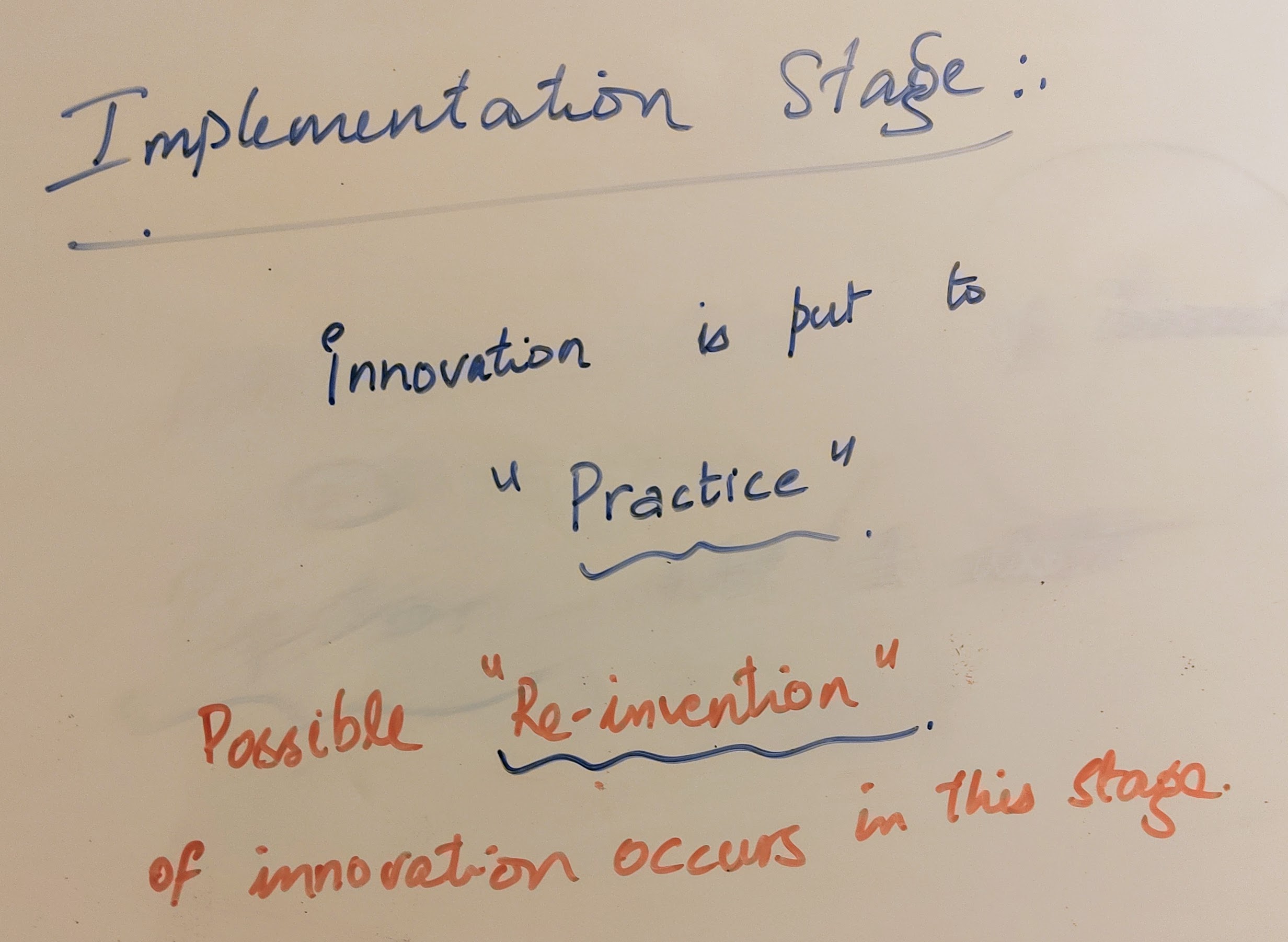
The implementation stage is when you start actually using the product or service. This is different from just thinking about whether to use it. You’ve decided to adopt it, and now you need to figure out how to make it work in your life.
You might run into some challenges:
- How do I use this effectively?
- What problems will come up when I’m using it?
- How can I fix those issues?
It’s important to keep asking questions and seeking information during this stage, especially if you’re a business or organization with many people involved. Sometimes, putting an idea into action can take time or effort. You might need to change the product or service to make it work for everyone. This is called re-inventing. Some experts worry that changing something too much can hurt its credibility, but others think it’s okay because it helps get rid of mistakes and makes the product more special.
Reasons why re-invention happens:
- Complex products might need simplifying, which means changing how they work.
- People might not know enough about using a product, so changes are made to make it easier for them.
- Products that can be used in many different ways might need extra features added.
- Changing the product helps users who have very specific needs.
- Cultural differences can lead people to change products to fit their own styles or customs.
- Working with other companies or consultants can also lead to changes.
- The way a company is organized can affect how much something gets changed.
Re-inventing a product happens when more and more people start using it, and they give feedback on what’s not working well. This helps make the product better and more useful for real-life situations.
“Products are not just made by designers, but also re-made by users.”
Confirmation Stage
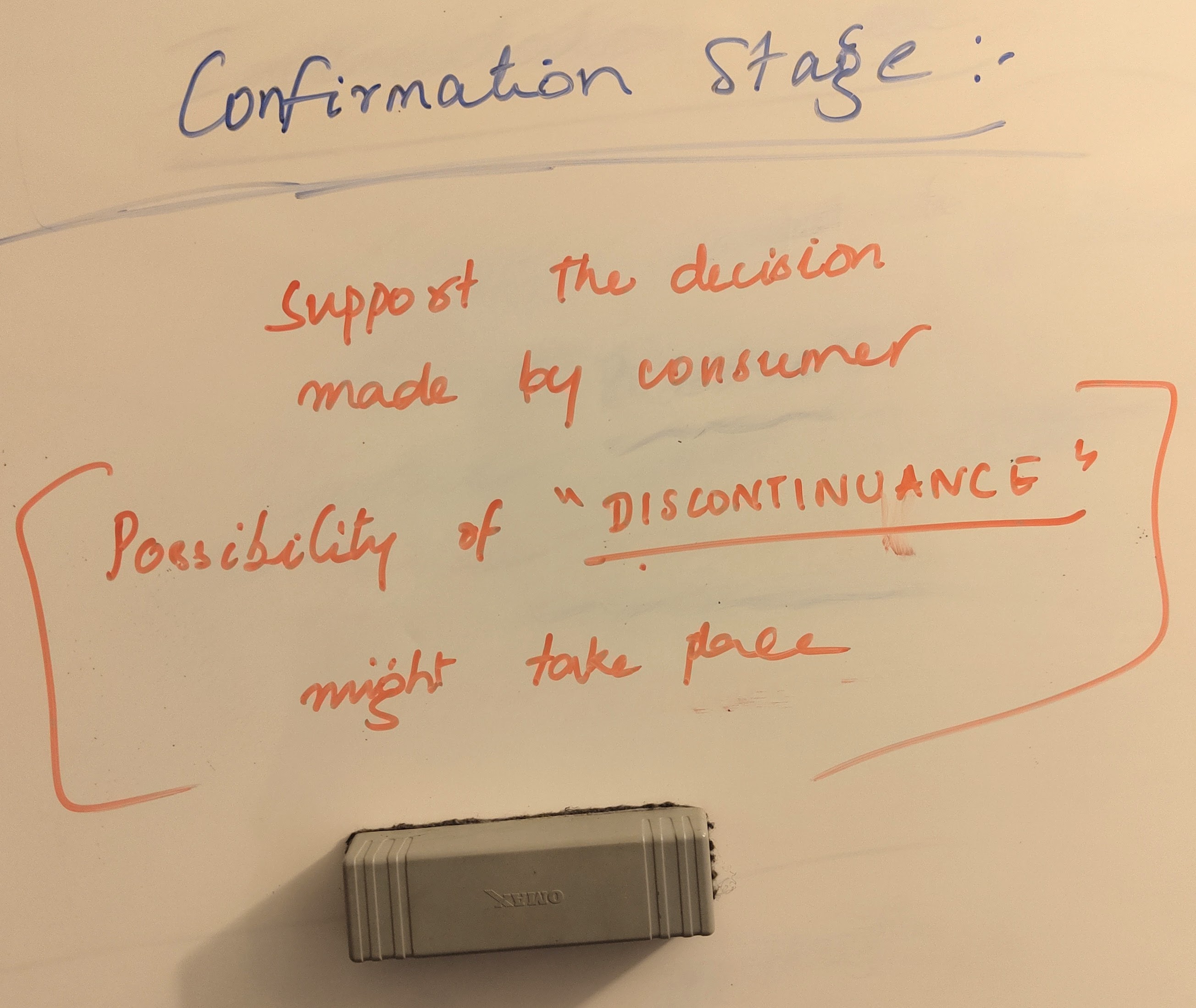
At this stage, customers want to make sure they made the right decision by adopting the product. If they hear conflicting opinions, they might start to doubt their choice. Most people feel uncomfortable when they’re not consistent with what they think and do. This feeling is called dissonance. To get rid of it, they might:
- Search for more information about the product to feel reassured.
- Change their mind if they realize they didn’t fully understand the benefits initially.
- Get disappointed if the product doesn’t meet their expectations due to poor support or unclear communication.
Sometimes, people decide to stop using a product after initially adopting it. This is called discontinuance. There are two main reasons why:
- Replacement: They find a better solution and switch to that one instead.
- Disenchantment: They’re unhappy with the product because they didn’t use it correctly or there were some built-in problems, so they try to fix it.
Conclusion
It’s not always easy to say for sure whether these five stages are the only ones that matter when it comes to getting customers to adopt a new product. The effectiveness of each stage can depend on the specific product and market. These stages help simplify the process of adoption by breaking it down into smaller, more manageable parts. This makes it easier for different teams within an organization to work together to meet customer needs. It’s not always clear when someone moves from one stage to another, and that’s okay! The important thing is to keep working together as a team to achieve our goal of making customers happy with the new product.
How We Work Together
In most companies, different teams handle each stage. This includes:
- Marketing (getting attention)
- Business Development & Sales (convincing people to buy)
- Operations (making it happen)
- Customer Success (ensuring they’re satisfied)
- Marketing again (building on success)
These distinctions help us keep track of who’s responsible for what, but our ultimate goal is to work together as a team to make customers happy.
Measuring Progress:
To make sure we’re doing well, each stage should have specific goals or metrics. These might include things like:
- How many people are learning about the product?
- How many are deciding to buy it?
- How satisfied are they with their purchase?
We can use different communication channels to reach our goals and influence customer decisions. By tracking these KPIs, we can make sure we’re on the right track and make any necessary adjustments along the way.